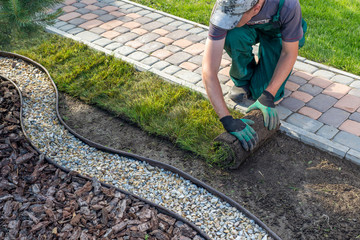
Maintaining a healthy green lawn year-round requires consistent care and attention to detail. This guide covers essential lawn care tips for each season, including mowing, watering, fertilizing, weed control, and aeration.
Start by removing debris that blocks sunlight and can harbor mold and disease. Mow frequently at the proper height for your grass type (2.5 to 4 inches). Water deeply each week in the morning and use a pre-emergent herbicide to prevent weeds. Visit Lawn Care Cape Girardeau to learn more.
Mowing
Mowing is a critical part of lawn care that has a significant impact on overall lawn health and appearance. Homeowners can do several things to keep their grass healthy and vibrant, including keeping a sharp mower blade that makes clean cuts. This reduces stress on the plant, and helps prevent disease from taking hold.
Regular mowing at the right height and frequency stimulates thicker growth that enhances aesthetics. This dense growth also protects against soil erosion. It creates a robust barrier against rainfall, preventing water runoff and allowing for better absorption.
Keeping up with lawn maintenance throughout the year, including core aeration and overseeding, also promotes healthier roots and dense growth. Applying a slow-release fertilizer in spring and pre-emergent herbicides in summer help to strengthen roots, control weeds and prepare the lawn for winter. Regular trimming of shrubs, a light layer of mulch and prompt snow removal also helps to preserve the lawn’s health and appearance.
Taking the time for regular seasonal lawn care is vital to maintain a healthy lawn that enhances your outdoor living space and adds value to your property. Jonathan Green offers professional lawn care services that are tailored to local climate and Western landscape conditions, ensuring your yard stays beautiful and healthy.
Watering
A lush green lawn can help reduce stress on the soil and environment. Keeping up with mowing, aerating, fertilizing and weed control practices is vital to keeping grass healthy all year round. Adding compost to the soil helps improve its structure and retain moisture, which makes it easier for grasses to absorb nutrients. Soil testing also helps homeowners better understand their soil conditions, which can impact nutrient availability and the overall health of a lawn.
In spring, lawns are preparing to face the heat of summer, so they need lots of water to stay strong and resilient. Aerating the soil to poke holes in the ground allows for more efficient air and water circulation, which leads to stronger roots. Overseeding thin areas fills in bare spots and makes the grass thicker.
Watering less often and for longer periods promotes deeper roots, which can withstand drought and disease. Avoid overwatering, which can restrict oxygen to the roots, resulting in weak grass that’s more vulnerable to pests and diseases. Watering in the morning is best, since it limits the amount of water lost to evaporation. The best way to know if the soil is saturated is by using the tuna can test: If you can’t push a screwdriver easily into the ground six inches, your lawn needs more water.
Fertilizing
Grass needs an adequate supply of nutrients to develop dense, green grass and outcompete weeds. Grass that is properly fed grows more vigorously and is better able to withstand environmental stressors, pests, diseases and extreme temperatures. Using fertilizer on a regular schedule avoids nutrient imbalances that can lead to excessive growth and thatch buildup.
The sandy soils common in beach towns tend to have a hard time holding nutrients, which requires more frequent and tailored lawn care practices. Performing a soil test and choosing a fertilizer based on the results can prevent nutrient deficiencies that cause pale, weak, and thin grass.
Early spring is the ideal time to start your lawn off strong. Begin by removing debris like leaves and branches that can suffocate new growth and invite disease. Rake and aerate patchy areas of your lawn to encourage deeper roots and outcompete weeds. In fall, overseed bare patches with Jonathan Green Black Beauty Ultra and apply a high-phosphorus fertilizer to support robust root growth for a thicker yard. Keep the landscape tidy by removing leaf litter regularly, and consider adding a layer of mulch to reduce soil compaction and conserve water. A well-groomed lawn enhances curb appeal and increases property values.
Weed Control
Keeping your lawn free of weeds is a year-round effort. It is best to prevent weeds from germinating in the first place by practicing good lawn care, but if necessary, post-emergent herbicides can be used. The key to effective weed control is to always read and follow the product label for your specific needs. Applying the right amount and timing of herbicides helps to ensure that your target weed is controlled while not injuring desirable turfgrass and ornamentals. Use spot spraying to minimize herbicide drift and to limit the impact of your application on nearby plants.
Regular hand weeding is critical to reduce weed populations, especially in established lawns and ornamental planting beds. Pulling young weeds before they flower and set seed is most effective. Perennial weeds such as creeping woodsorrel (oxalis), nutsedge, and dandelion spread by producing rhizomes or tubers and can be difficult to eradicate. A dandelion knife or weed puller is helpful for removing the roots and underground portions of these plants.
Excessive moss growth is often an indication of poor soil conditions. Clover and mushroom growth indicate low nitrogen levels in the soil, while a crop of dandelion indicates high alkaline and/or high salt content in the soil.
Aeration
Aerating your lawn loosens dense soil, allowing oxygen, water and nutrients to reach grass roots. The technique involves punching holes in the turf using a machine that removes small plugs of thatch and soil (also known as coring, spiking or slicing). Aeration reduces soil compaction, improves nutrient and water absorption, helps manage thatch and supports overseeding efforts for thicker grass.
A thin layer of thatch (dead and living organic material) is healthy, but too much can block water and nutrients from reaching the roots. Aerating loosens thatch, promoting decomposition and boosting microbial activity to keep it under control.
Aeration is especially important for yards that have cool-season grasses, like ryegrass and bluegrass, which require cooler climates to thrive. It’s typically recommended that these types of yards get aerated in the fall. For warm-season grasses, such as Bermuda and buffalo grass, aeration is best done in the spring or early summer. When aerating your lawn, it’s helpful to double aerate in a crisscross pattern. This creates twice as many holes for grass seeds to grow into, resulting in a thicker lawn.
Pest Control
Keeping your landscape healthy and beautiful requires more than just routine mowing, regular watering and occasional weed control. A thriving lawn is the foundation of a healthy property, and the appearance of your yard can greatly affect home or business value, customer perceptions and overall success. Commercial property owners face additional challenges, as they often must manage pest populations that threaten the health and appearance of the entire landscape.
Proactively managing insect infestations can save time and money, while minimizing the potential for damage that necessitates costly repairs. The first step is to recognize the problem early and identify the source. This allows you to apply the most effective treatment, including natural pest prevention strategies like nematodes and birds.
In addition to applying non-toxic pest control products and practices, choosing eco-friendly grasses and organic fertilizers can also reduce your reliance on chemicals and support a healthy ecosystem for humans, pets, pollinators and microorganisms. This holistic approach, known as integrated pest management (IPM), is essential for a healthy green yard year-round and ensures that your lawn is balanced and sustainable. Learn how one family used IPM and native plantings to transform their toxic chemical-dependent lawn into a healthy habitat for pollinators and human health.
Soil Testing
Soil testing provides you with a clear picture of your soil’s health, which in turn helps your lawn look its best. Testing reveals nutrient levels, including nitrogen (N), phosphorus (P), and potassium (K), and pH levels, as well as micro-nutrients like calcium and magnesium and trace elements such as sulfur. It also shows your soil’s composition, with a balance of sand, silt, and clay, and indicates how much organic matter is present in the soil.
Regular soil testing allows you to address any imbalances in the soil before they result in poor grass health or lead to problems like unsightly weeds, pests, and disease. For example, a low nutrient level can be addressed with tailored fertilization treatments. And, if the soil is too acidic or alkaline, lime or sulfur can be added to correct the pH level.
Soil testing is easy to do yourself with a kit purchased from a lab or garden center. Usually, the kit contains a small sample bag for you to collect soil from various locations throughout your yard or garden and then place it in the provided bucket. A laboratory will then analyze the sample and provide you with a report of your soil’s nutritional status, along with recommendations for improving your soil. To get the most accurate results, you should take your soil test in early spring or fall, prior to applying fertilizers and other amendments.
Visit our Professional Services Blogs
Courtney Roberts Home, All Portland, Edward Lower Accounting, Trade Link Media Communications, Airconditioning Xperts, Clear Remediation, Deck Garden Furniture, Best Heating And AC Repair Covington WA, Absolute Heating And AC Repair Glendale, Trendy Mobile Designs, Kendall Lakes Tree Care, Palmetto Bay Tree Care, Jersey City Family Law Firm